
ALVIN'S INSIGHTS · MEDICAL INFLATION
Why Do Health Insurance Premiums Rise?
Medical technology, testing, medicines and demand are changing the cost of private healthcare. Here is what that means for a family's cover.

Many clients ask the same question when their renewal arrives: why has my health insurance premium gone up again?
NIB groups two of the main reasons into medical inflation and the way claims costs change as people get older. This article focuses on the first one — medical inflation.
Medical inflation does not simply mean that last year's treatment now costs more. It can also mean that patients are receiving more tests, newer technology and treatments that were not widely available in the past.
01
What is medical inflation?
Medical inflation is the rise in the cost of healthcare over time. It includes hospital care, specialist appointments, tests, medicines and treatment.
It is not only a case of a hospital charging more for exactly the same service. The way people are diagnosed and treated also changes. A procedure may now involve more scans, newer equipment, a different medicine or a more advanced type of surgery. More people may also seek treatment than they did before.
That is why the general Consumer Price Index, or CPI, does not tell the full story. Everyday prices are affected by wages, rent and supply costs. Healthcare is affected by those things too, but it also changes with medical technology, new medicines, clinical practice and what patients expect from treatment.
02
Why are medical costs rising?
Newer surgery and medicines
Robotic surgery, keyhole procedures and new medicines may reduce risk, shorten recovery time or improve a patient's quality of life. These advances can be very valuable, but they are often more expensive when they first become available.
More detailed testing
Doctors may use more imaging and scans to understand a condition and check the result of treatment. NIB gives an example of major joint surgery: where two diagnostic procedures may once have been common before and after surgery, three may now be used in many cases.
More people seeking treatment
People are more aware of symptoms and treatment options than they used to be. Conditions that may once have been tolerated are now more likely to be investigated and treated. That can improve people's lives, but it also increases the number and overall cost of claims.
03
What does the data show?
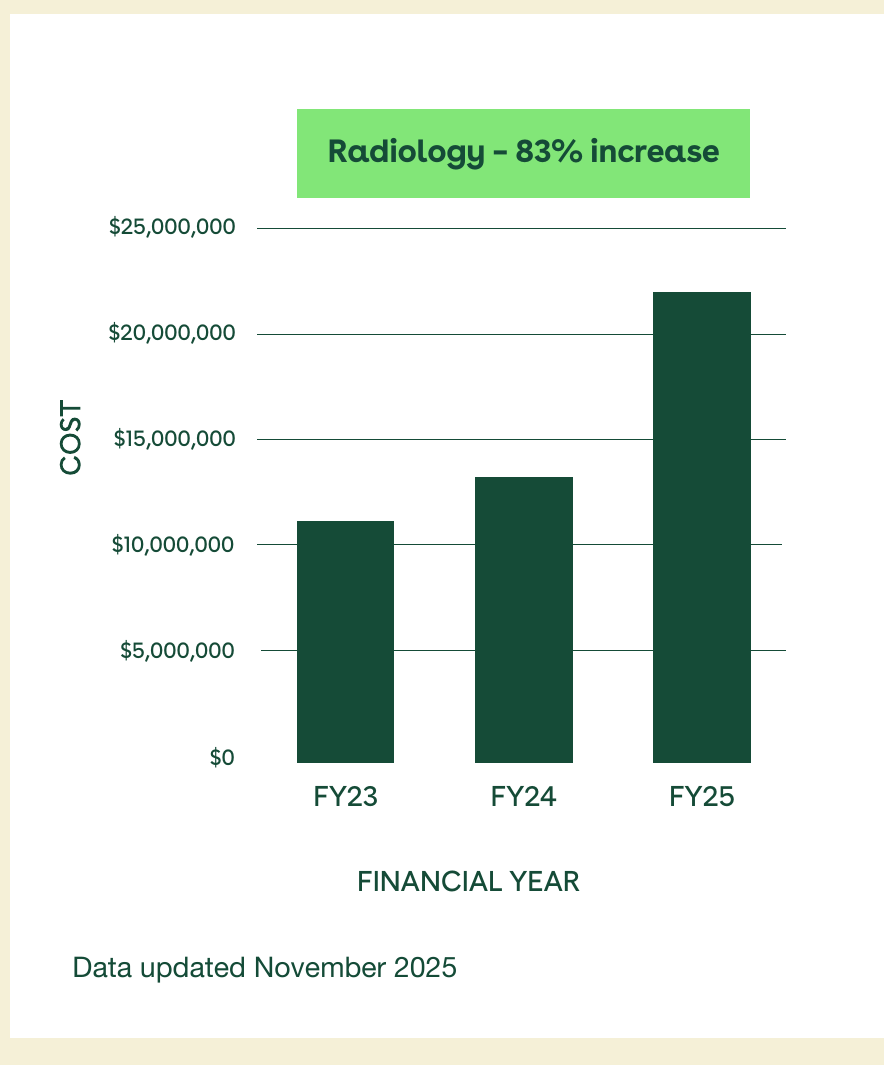
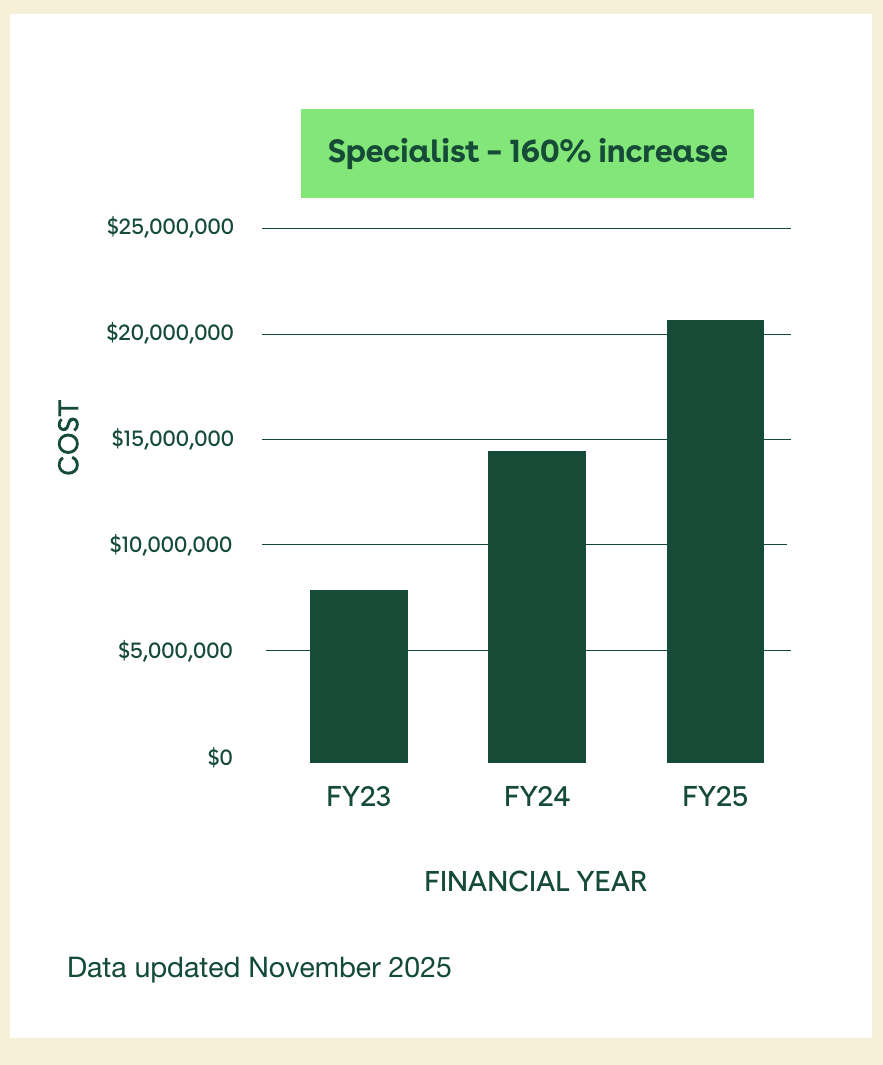
NIB's 2025 adviser material shows a clear rise in two areas between FY23 and FY25:
- radiology-related costs increased by 83%;
- specialist-related costs increased by 160%.
Another example: AIA's claims data
AIA's annual claims figures also show how medical claims have changed.
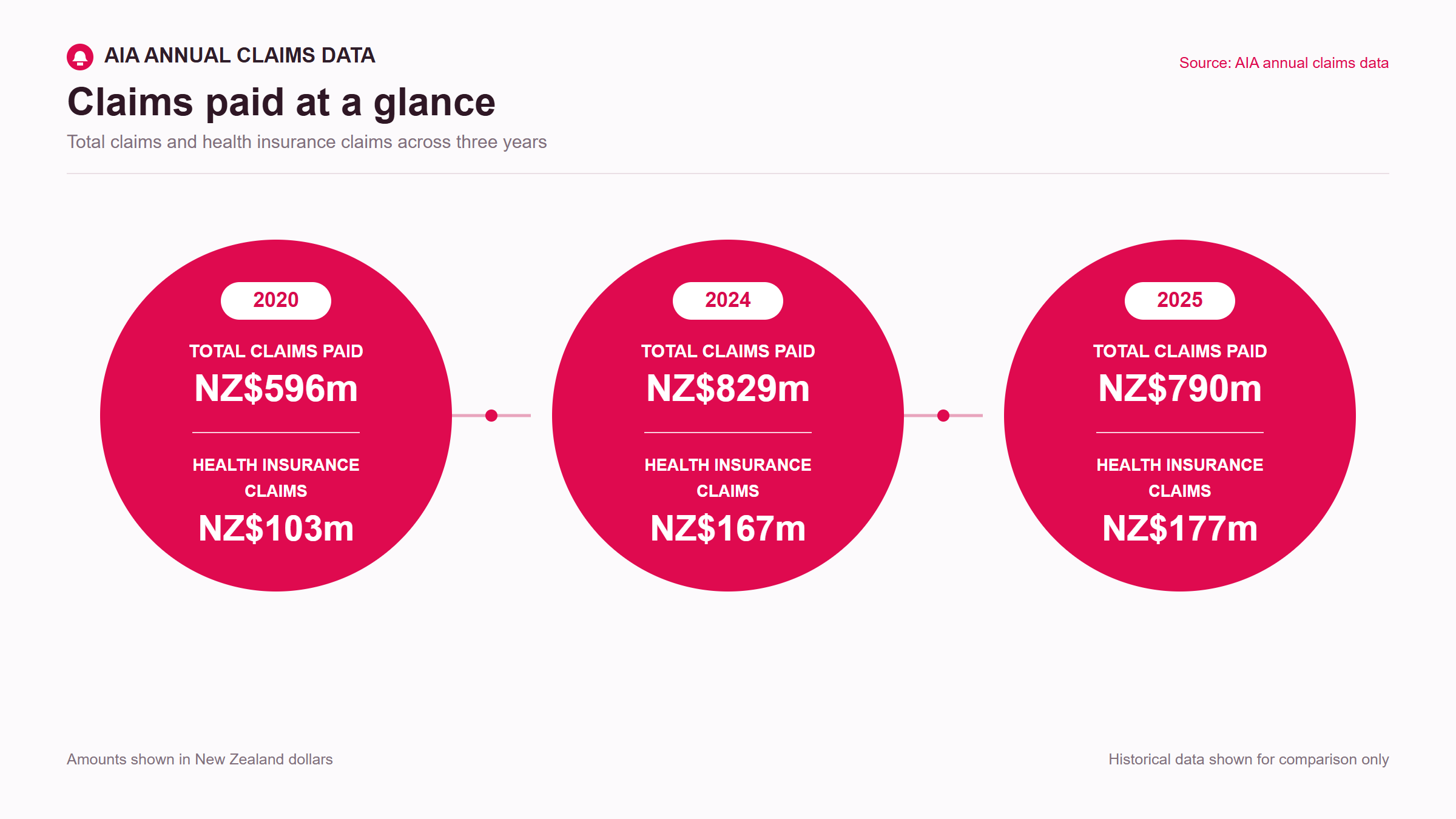
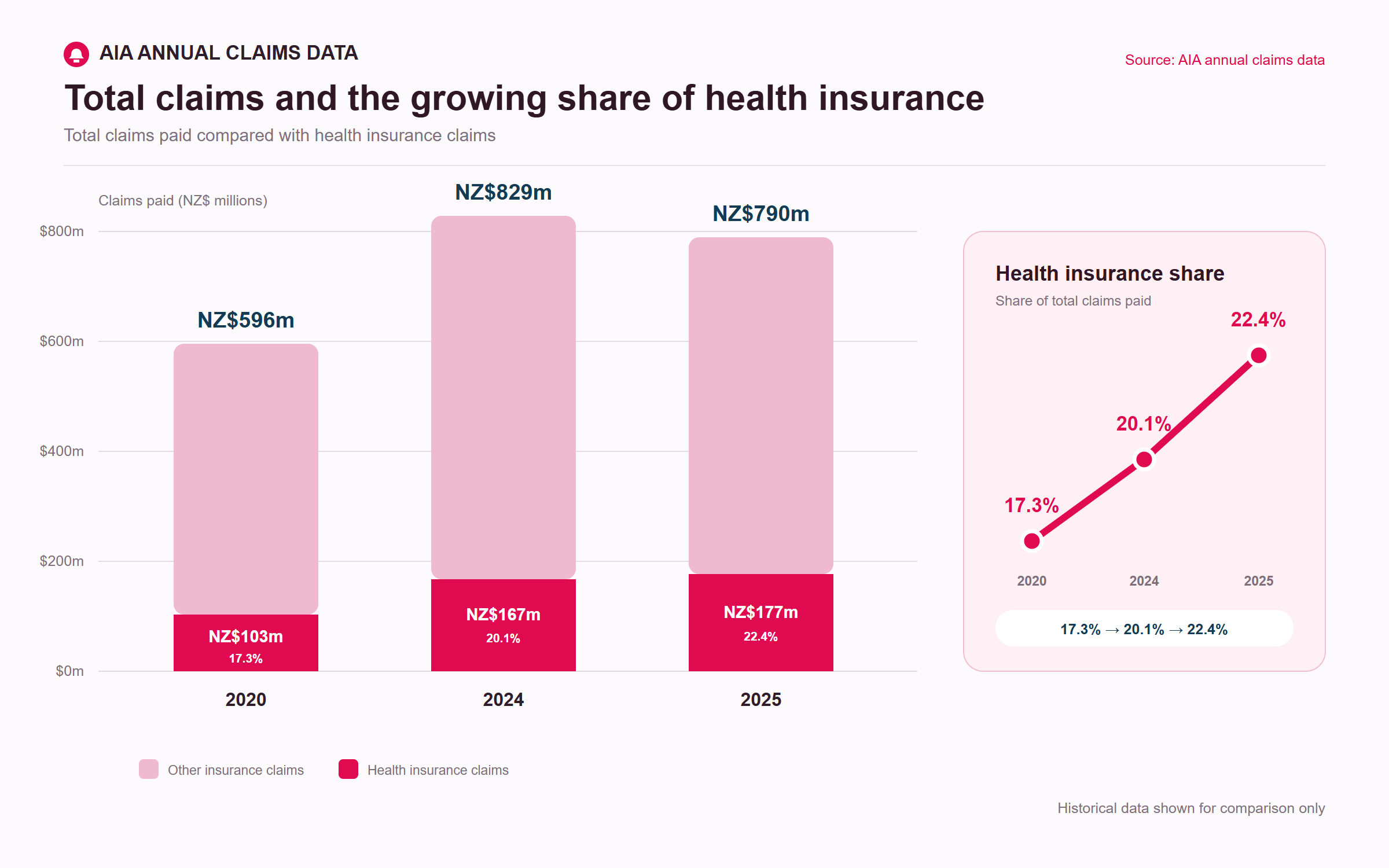
Across all types of insurance, AIA paid NZ$596 million in 2020, NZ$829 million in 2024 and NZ$790 million in 2025. Health insurance claims were NZ$103 million, NZ$167 million and NZ$177 million in those same years.
The overall amount paid in 2025 was slightly lower than in 2024, but health insurance claims continued to rise. Health claims also made up a larger share of total claims: 17.3% in 2020, 20.1% in 2024 and 22.4% in 2025.
This does not prove that every part of the increase came from medical inflation. It does show that health-related costs are taking up a growing share of the claims paid in these three years.
05
What can a family do?
When a renewal becomes more expensive, cancelling straight away is rarely the best first step. But accepting every increase without reviewing the cover is not the answer either.
Start with a few practical questions. Which medical costs would be difficult for your family to pay itself? Which smaller costs could you manage? Does the current policy still fit the household budget?
Keep the cover that protects against the largest costs
Look first at hospital care, surgery, specialists, major investigations and high-cost treatment. Cutting these benefits simply to reduce today's premium may remove the part of the policy that matters most.
Review the excess and optional benefits
If the family has some money available for an excess, increasing it may reduce the premium. Lower-priority optional benefits can also be reviewed. The aim is to keep the cover that matters while making the overall cost easier to maintain.
Think beyond the first year's price
Policy wording, future affordability, age-related changes and likely income all matter. A cheaper first year does not always mean better long-term value.
Be very careful before replacing a policy
Health insurance should not be replaced simply because of a special offer or a single price comparison. If your health has changed, a new application may come with exclusions, a higher premium or no offer of cover at all. Waiting periods, definitions and claim conditions may also be different.
Before cancelling an existing policy, make sure the new policy has been formally accepted. Discuss any change in detail with your adviser, including:
- what cover or benefits may be lost;
- whether new underwriting creates exclusions or extra cost;
- differences in wording, definitions and waiting periods;
- the real benefit of the change; and
- any conflict of interest connected with the recommendation.
Replacing cover should be considered only after these risks have been clearly explained and understood.
Important information
This article draws on NIB NZ Limited's 2025 adviser material and includes Alvin's general explanation. It is not a word-for-word reproduction of NIB's material and does not represent personal advice from NIB.
The article provides general information only. It is not personalised financial advice and does not replace medical advice. The NIB charts report cumulative increases of 83% and 160% in the areas shown. They are not quotations for a particular treatment, a measure of every insurer's claims costs, or a forecast of future premium increases.
Products, policy terms, premiums and underwriting decisions depend on the insurer and the client's circumstances at the time.